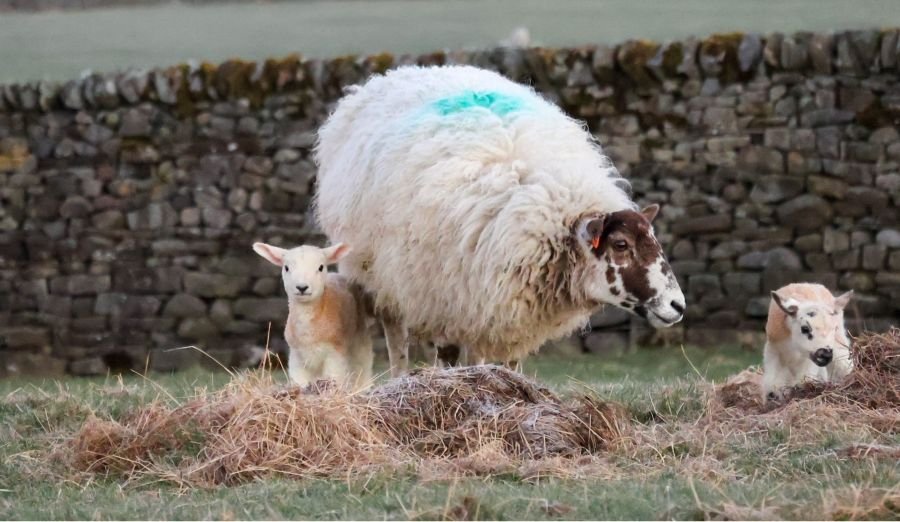
Lambing Time
With lambing season upon us, it’s the perfect moment to review the diet of your in‑lamb ewes to ensure their nutritional needs are fully met. Scanning results and body condition scores will help you determine the right plane of nutrition. Getting this right now has a huge impact on lamb vigour, colostrum quality, and the overall health and productivity of your flock.
Remember to introduce any dietary changes gradually**
Forage Quality
Maximising the use of homegrown forage in ewe diets is the best option to ensure efficiency, reduce costs, and optimise rumen health.
In-lamb ewes will, on average, eat 2% of their bodyweight in dry matter per day and with forage being at least 60% of this, the quality of the forage has a big impact on the overall diet. Analysing forage is crucial so that you know exactly what the ewe is eating and what it contributes nutritionally, allowing you to make informed decisions about whether additional supplementation is necessary.
This year, due to the dry summer, forage stocks are low, so making the most out of forage is even more important.
Importance of Quality Protein
As lambing approaches and lamb size increases, the available space within the rumen of the ewe reduces, so although her nutritional requirements are increasing, her feed intakes are not. In particular, protein requirements increase and without sufficient protein, lamb weights can suffer, milk yield will reduce, and colostrum quality will decline.
Protein synthesised by rumen microbes is called microbial protein and close to lambing typically only meets 60-70% of total protein requirements, so rumen bypass protein in the form of Digestible Undegraded Protein (DUP) supplementation is necessary. Crude protein does not indicate protein quality or DUP content, so it is crucial to look at the sources of protein in the feed composition.
Good sources of DUP include hipro soya and micronized flaked soya.
Testing for Colostrum Quality
Testing colostrum quality is a good way to ensure the measures being put in place are working. Colostrum quality is tested using a Brix refractometer, which works by measuring how light refracts as it passes through the colostrum sample. The target Brix figure for sheep colostrum is a minimum of 26%.
It is recommended that a selection of ewes within the flock are tested to get an overall picture.